
Understanding Vibration Management

SOUND IS VIBRATION

We enjoy hearing about and auditioning all the adaptations of audio’s vibration accessories and theorems where everyone has their own beliefs and reliefs.
We will provide answers to many questions throughout this series of writings about sound reproduction, designing sound rooms, musical instruments, and listeners.
My name is Robert Maicks. My life involved music and related fields before joining Live-Vibe Audio some thirty years ago. For twelve years working as a concert and studio engineer with vast musical instrument knowledge, my background has proven to be an invaluable asset throughout my high-end audio career.
The following information dedicated to those who came before lays the groundwork for the High-End Audio marketplace. We will dispel the myths, advance the truths, and hopefully teach a new breed of listenership the art of sound and musical reproduction.
As the title says, Sound is Vibration. You will never destroy, isolate, decouple, or terminate vibrations, particularly in a vibrating musical environment. Once you get past that reality, the fears of vibration become a nonplayer as vibration develops into a tool for extending your listening enjoyment.

Ten years ago, the High-End Audio listenership demanded proof for everything. Theoretical adaptations challenged to display exact scientific proof of function are meaningless. After learning that scientific proof to any audiophile was nothing more than presenting home-grown charts and experiments that always favor the home team, the battle over truth versus fiction slowly digressed into the void of audio dogmas.
Nowadays, everything is more relaxed and demands less science and physical proof. More attention on fads, trends, belief building, and fictional storytelling, and, unfortunately, heavy amounts of dollars spent on full-page advertising and marketing are driving the current marketplace.
There is a host of variables that are involved in defining, analyzing, and writing about audio functionality. Most will agree any starting point leads to more topics.
Tremendous quantities of rabbit holes exist in the historical audio storybook. Some beliefs are still being drilled into our brains by reviewers’ and manufacturers’ endless tall tales about isolation. I was once a believer until practical science led us on a tour of vibration in musical reproduction, industrial issues having nothing to do with sound and function, and analyzing electricity.
ELECTRICITY HAS VIBRATIONAL PROPERTIES

For many years we were taught making the room and components sound dead was the way to go compared to a live-sounding dynamic environment. Most home-theater designs practice the dead as a better routine to this day. After decades of using sand, lead, rubber, tack glues, foams, and all those materials that simply sound bad and ruin live dynamics, there are still many audiophiles recommending them.
After four decades, very little scientific proof exists in defining audio product function accompanied by third-party testing and validation or anything related to an exacting science for vibration management.
Most audio testing is subjective to human tastes or marketing agendas. Scientific laws are seldom applied to test criteria. Formidable scientists poke fun at audio people and their multitudes of methodologies and beliefs who deem their method is the magical one!
The ability to mechanically isolate anything in the presence of gravity is impossible. If you believe in physics, the laws of gravity, vibration, and motion, true mechanical isolation is impossible on this planet.
Until 2000, everyone in audio thought isolation was the goal of measuring success among vibration theorems. This long-lived adaptation leads to the reason for writing this document.
COUPLING VERSUS DECOUPLING IS THE OLDEST DISAGREEMENT IN MANAGING SOUND
The Coupling vs. Decoupling war rages among listeners, product builders, reviewers, marketers, and magazines. Over time, this theorem has become the name brand used to describe all methodologies for vibration control. Isolation is one theory among six theorems. Vibration Management is not isolation. Equipment and speakers floating in the air free from all earthly vibrations are not possible.
- Does anyone in audio realize that mechanical coupling is scientific fact and decoupling is wishful thinking?
- Does anyone remember who made the early discoveries?
- Does anyone realize that you cannot spend your life searching for musical equipment that does not vibrate while functioning in a vibrating environment?
- Do you recall the isolation theorems, stories, and tales that existed for generations and are proving to be nothing more than audiophile folklore among science?
- Does anyone realize that electricity is the root cause of vibration?
- Does anyone realize that vibrations are the lifeblood of music?
For example, today, the newest selling trend is isolation springs. Yesterday it was spheres, pucks, and absorbent or constrained layered discs or any combinations thereof. Springs were sold in 1990 to offset vibrations. What you are currently experiencing is all these products are now packaged in beautiful techy-looking housings but still sound the same and use the same principles as they did forty years ago.
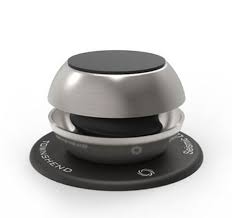
For example, springs defined by science are “coupled” to the earth. Everything on the Earth is direct coupled to the planet. The laws of motion, vibration, and gravity were born based on this understanding.
In the early years, it was cones – “no, not spikes” but geometrical-shaped cones. The first two released months apart were Tip Toes made from aluminum and Audio Points made from brass. There is a difference in sonic performance and applications between nail-head spikes used with floor speaker systems and a well-thought-out cone function.
Spikes never were considered a part used in vibration management, at least not in ways people relate to vibration control these days. Their sole purpose was to lift speakers off the flooring. Springs were not as reliable in performing this feat as they were weight-specific, suffered from spring fatigue, and cost more money to fit and mount to a loudspeaker. The hardened nail head spike became the keeper and a two-bit accessory item that still comes with every pair of speakers sold.
Do not inform the isolation believers of this information because the cheap two-dollar spike is their go-to reference part and principal argument attempting to validate isolation and decoupling theorems. Those cheap spikes help strengthen the validity of their isolation or decoupling opinions, product function, and home team testing comparisons.
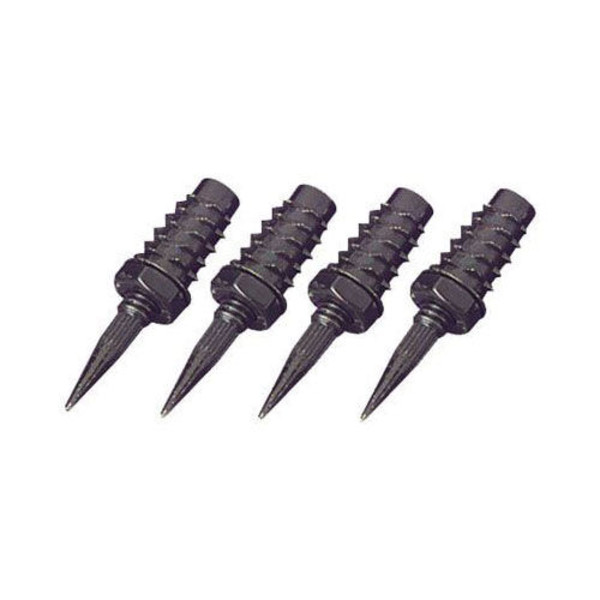
Audiophiles generally come from brilliant backgrounds yet are very gullible when seeing tests or experimentations that involve a speaker spike up against thousands of dollars worth of springs, pucks, pads, etc.
It is hard to believe that two-dollar spikes drive the conversation. We have heard repeatedly, “I tried spikes and found that decouplers sound better”? Because you once used a penny nail with a thread forming a spike cannot be compared to the cone’s performance levels.
For example, compare a two-dollar spike to a conical-shaped product costing three hundred dollars. I bet your impression of a spike changes immediately, so are you still going to call everything with a sharpened tip – a spike?
Spikes couple, and so do wafers, pucks, springs, and anything you place underneath equipment. That is a factual statement. I have asked many listeners and parts manufacturers what you are decoupling. Most say signal, so then I ask which one? Is it electronic, acoustic, mechanical, or combinations thereof? Is it attempting to stop or slow resonance energy transfer? The answer always is silence.
Is decoupling nothing more than interrupting or delaying the speed flow of resonance to the ground? Is decoupling establishing a less efficient method of resonance transfer?
Once you realize that mechanical isolation is impossible in the presence of gravity, isolation, and decoupling become difficult to imagine.
This example proves Audio is a perfect place to sell fiction.
Decoupling or true isolation might exist in outer space free from the laws of gravity and Earth’s ground plane, but not here on this planet, at least not yet.
I began writing about these and other topics displaying some of my past experiences in professional audio, current times working with listeners, and future goals. Many of my friends have passed, so before I go to the great gig in the sky, we decided to publish those experiences on this Live-Vibe Audio website.
I hope this documentary helps you along the way. We truly wish you all the best in your lifetimes.
I am available for conversations at 330-260-6769 if you would like to have a discussion.
As always – Good Listening!
Robert Maicks
Sound Engineer and Vibration Management Consultant
Part 1: ISOLATION IS THE NUMBER ONE MISCONCEPTION IN AUDIO
THE AUDIO INDUSTRY BLEW IT!
Since the beginning of vibration management in sound reproduction, Hi-Fi reviewers and a couple of manufacturers have chosen the term “ISOLATION” as the title for all products related to managing resonance formed by vibrations.
Isolation methodologies, human beliefs, and theorems form the partnership with the term de-coupling. Isolation concepts engraved into our heads over the decades make it easy to make up your concept of decoupling. Most envision this as your equipment floating in a place free from all vibrations.
Isolation is a technique. There is a multitude of modus operandi in audio used to treat vibration.
Since the beginning, audiophiles, musicians, and professional sound people believed isolation techniques were the only way to treat the ill effects caused by resonance build-up affecting signal flow. The equipment must float in space. It should not vibrate, especially to the human touch.
If you believe this malarkey, the musical reproduction truth and sound quality will never become your reality.
Everything related to after-market footers is now named isolators.
One theorem is if you built a sandbox filled with rubber as the primary absorbent material, instead of calling it a resonance or vibration absorbent methodology, the Audio Industry called the technique isolation. If a part designed as a resonance transfer device takes the shape of a cone, it becomes an isolation footer. A device using constrained layer damping is another misnamed isolation device. Everything in the vibration management field is commonly known and referred to as isolation devices, techniques, and isolation products.
Here is the rub: True mechanical isolation does not exist on Earth. Gravity is the force recognized hence disrupting all realities surrounding isolation. The isolation terminology and advertising storyboard link all the stories in a fiction-based format.

Decoupling is not a mathematical science. It is a widely used theorem, a thought process.
True mechanical isolation may only exist in the vacuum of outer space.
The isolation or decoupling branding blunder is still being ignored or is too old for change.
The informative press does not want to understand vibration management or wishes to take the time and learn more about how audio works. This strategy puts most devices, products, theorems, and applications as isolation products and keeps the public ignorant of the various vibration management processes.
From a competitor’s standpoint who is developing a newfound science related to vibration management, the industry name-brand “isolation” already points to decoupling, so reality states that “you cannot fix stupid” Ron White.
The audio industry does not use the sciences of sound but what sounds more believable in a story format and is easiest for the audience to understand. We will discover more of these situations as we explore the complex world of sound reproduction.
Welcome to High-End Audio.
Part 2: DECOUPLING – AUDIO’S SECOND ULTIMATE MISCONCEPTION
Audio forums and video blogs continue to dispute the topics of coupling versus decoupling.
In scientific facts and physics, mechanical coupling has developed over the millennia, becoming one with the understanding of worldly functions. Mechanical coupling is well-documented and accepted by our peers.
Decoupling methodologies are based on theorems or storyboarding marketers. Decoupling beliefs are non-compliant with the accepted laws of motion, gravity, Coulomb’s law, and science as we know it.
Physics 101: All energy seeks earth’s ground and will gravitate there via the path of least resistance-coupling.
Expert physicists versed in quantum physics are researching the topic of where everything throughout the universe couples.
Techniques, opinions, or products claiming to decouple are present in the Audio Industry. A baseless opinion rendered by marketers, accessory salespeople, and audio reviewers is taking you aboard the mystical Ripley’s train.
Couple – a pair of equal and parallel forces acting in opposite directions and tending to cause rotation about an axis perpendicular to the plane containing them
Audio basic understanding – to mechanically ground a device to move or transfer unwanted resonance energy out and away from the listening device or devices.
First Universal Law: The first and most foundational law governing the universe is the Law of Divine Oneness, which highlights the interconnectedness of all things. It says that beyond our senses, every thought, action, and event connects to anything and everything else.
The Second Universal Law is vibration, which posits that everything (every atom, object, and living thing) is in constant motion, vibrating at a specific frequency. You can think of this frequency as vibrational energy.
Decouple – separate, disengage, or dissociate (something) from something else
Audio’s basic understanding – to isolate or float a device, keeping the earth’s vibrations away from entering the device or devices
The Science-Based Reality:
Again, both technically and scientifically, coupling follows the laws of motion and gravity and is supported by formulas such as Coulomb’s law and mathematics. You can do your research on decoupling to see how far you get.
There is proof that some of audio’s finest coupling products provide a level of SCIENCE-BASED TESTING that supports the methodology of resonance transfer by using temperature as the ‘control factor’ for testing. Temperature reduction is undeniable evidence of function, and that type of proof draws in academia and scientists.
Tests using Real-Time Analyzation, Sound Pressure Levels, and Musical Quality listening are merely subjective topics lacking comparisons via documentation and third-party testing. Science is not interested in subjectiveness or opinions.
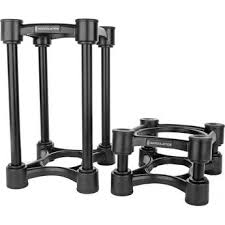
Decoupling does not exist in real-world physics. In audio, there is a long history of beliefs that decoupling functions like floating one’s equipment in outer space free from all worldly vibrations and resonances will make for better sound quality. There are NO SCIENTIFIC MERITS TO SUPPORT the decoupling of audio systems.
Everything on the planet requires mechanical grounding functions to work. This list also includes a laundry list of products known as decoupling, all of which eventually couple to the ground.
A few isolationists claim all energy dissipates into heat via absorption materials or phase cancellation. Here on Earth, everything that has a function or uses fuel and physically contacts the ground – so do the absorbent materials and heat.
There is a project called LIGO. That experiment was responsible for the discovery of gravity waves. They used an isolation technique to hold mirrors in place. In this case, specifically designed isolation mounts worked. However, you will find that the chassis surrounding the device and the room supporting the project have large telephone pole-like structures that mechanically ground everything to the planet.
In audio, decoupling is nothing more than a slower version of coupling. Sluggishness is a descriptive term that makes for poor storyboarding and storytelling in the sound industry, where everything related to function is at high speed, so the old mentalities about isolation preached repeatedly bear no truth to product function and sonic outcome.
A page will be posted soon titled COUPLING – DECOUPLING Then RE-COUPLING. Here we take isolation products known as active isolation tables and prove that isolation does not exist.
Part 3: VIBRATION TO HEAT CONVERSION
Converting vibrational energy to heat is again the most popular methodology for isolation devices. Is there any data from neutral scientists showing how this heat conversation relates to audio gear, equipment racking, component/loudspeaker footers, and our hearing?
We have limitless audio companies telling us they convert vibration to heat. Try to find one that has proof thereof.
There are differences between the methods of resonance dissipation, absorption, heat conversion, and resonance energy transfer. Heat conversion is a scapegoat of sorts. No one knows or can value what percentage of the vibrating object becomes heat versus absorption.
Audio talk just goes with the flow of a good story.
An accredited Russian Scientist has discovered a new physical paradox.
“By Saint-Petersburg Polytechnic University recently published documents supporting that heat generated from resonance conversion became airborne and then again was attracted back into the metal chassis in the form of vibration titled Ballistic Resonance hence re-establishing the problem of resonance build-up in a constant repetitive state.”
Ballistic Resonance shows that heat energy from phase cancellations and absorbent materials is born again. Once airborne returns to the original device of mass that created it. Therefore heat dissipation is a returning process of vibrational energy affixed to the parent mass and eventually seeks and locates the ground plane via resonance transfer. Heat is a recurring problem at best.
Another discovery: Researchers uncover a new way heat travels between molecules
by Ali Sundermier, the University of Pennsylvania, released their findings, published in the Proceedings of the National Academy of Sciences, showing that heat transfer occurs when the electron moves between two molecules that are at different temperatures. Electron transfer is possibly the most important process in chemistry, according to Nitzan.”Half of the chemistry is electron transfer processes,” he said. “It has been investigated for 100 years on the molecular scale.”
Most listeners use articles like this to help search for more information.
Why do our guts tell us more about sound than textbooks and documented information?
Therefore, energy converts to heat, but in musical reproduction, where everything is generated and moves at high speed, the heat conversion process plays catch up to the speediness of sound. The timing of the beats per measure always seems to be off-kilter whenever we use heat-converting devices.
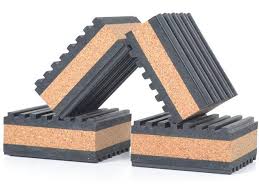
Heat conversion is a slower methodology of vibration management. Sound reproduction is all about high-speed. There are musical characteristics known as attack, sustain, and decay. Timing remains critical to the result.
We have the original note or vocal. Everything used to create those characteristics is traveling at high speed. The vocal cord, the string movement, and the percussion vibrate onto the microphone diaphragm. Then the signal passes through electronics to the loudspeakers and into the eardrum. All are traveling and vibrating at high speed.
Why opt for a sluggish vibration theorem or product?
I am not a physicist, chemist, or scientist and understand enough to be dangerous when it comes to the academically inclined, but I do know how to attain high-quality sound.
Any design related to heat conversion uses a lot of absorbent materials These materials destroy the live dynamic and harmonic structures we search to obtain. The listener suffers a setback in performance because of the material used to treat vibration.
As we know, the rock musician plays slightly ahead of the note. The classically trained musician tends to play a touch behind. I have been taught and trained to assume the leading edge sounds best. It could be the rocker in me or a symbiotic relationship to time stating this, but I live to obtain the live sonic.
Heat conversion is a functioning process. Since there is no universal formula for materials, applications for structural listening environments, and musical instruments, we elected to take on other technical pursuits that provide us with usage expansions and structured scaling of our technology.
High-Speed Resonance Transfer comes out on top every time.
Part 4: COUPLING – DECOUPLING THEN “RE-COUPLING”

All the companies that make these products provide homegrown tests attempting to prove decoupling isolation is a scientific fact. Every isolation table requires AC/DC power to float and level the microscope tabletop or sub-chassis. We set up the isolation table with the component. Then put the electronics and active stand on a direct-coupled Live-Vibe Audio platform, and the sound quality improves. Not just a little bit, but a lot!
Noise generated by electricity does affect the signal and components residing on the floatation device. When mechanically grounded (coupled), everything related to sound reproduction gets better. Re-Coupling might become another topic, theorem, or marketing pinpoint for the “What’s Next in Audio Footers” discussions.
What is re-coupling? Here are a few scenarios to help understand the theory.
A favorite scenario of ours is taking the name-brand Active Isolation Table as used to support electron microscopes. These table-top isolation devices claim to float a table on all axes to minimize the effects caused by outside vibrations, and they do so to a fair degree.
The microscope first sits on or is coupled to the floating tabletop on the isolation stand. The isolation table activates using electricity controlling the motions of the table. According to the manufacturers, this process isolates or decouples the instrument from all vibrations.
Since these units have found their way into the audiophile marketplace based on the decoupling/isolation theorems, we decided to test them ourselves. Their function related to audio and sound reproduction has no meaning compared to electron microscopes. The sound of the component changes and remains subjected to vibrations coming from the power supply and electricity.
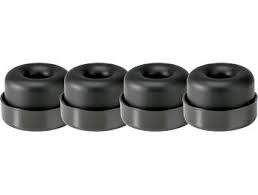
None of these companies addressed the noise located within the electricity as a vibration problem. Electricity, noise, and vibrations caused by the fuel appear as forgotten when taking their measurements.
Here we have a few audiophiles who spent thousands of dollars to isolate or decouple their audio equipment on an active isolation table. It works according to their descriptions. They say it does a great job of isolating as everything appears to run quieter. We enjoy hearing about a product that physically works to improve sound quality.
Do we now call this process “re-coupling” or improved isolation?
We believe Live Vibe Audio has the finest coupling products available. Most isolation tables cost more investment dollars than our finest platform, so let the money handler in charge sonically compare the differences.
No one ever put an electron microscope in a sound room and expected it to work. No one thought that adding a mechanical grounding pathway to an isolation table allowing electrical interference to evacuate the component’s chassis’ would improve sound quality.
There you have it. The cost of the audio component then the audiophile adds three to five thousand dollars to the electronically powered isolation table. Finally, adding a five-hundred-dollar coupling platform to the base of this structure completes the recoupling process. Does the five-hundred-dollar coupling platform do all three?
If you take a spring-based product used for speakers and add Audio Points to the spring’s mounting assembly, the sound performance also improves dramatically. Another type of “re-coupling” methodology works.
A lesson learned as this is about sound and not microscopes or seismic studies. When you apply various innovations designed for other applications outside of audio reproduction, you are searching for a better format, forgetting the one important thing.
Does the outcome sound musical?
The product should not sound whatsoever. Silence is golden. If the device does its job of vibration management, the component or loudspeaker should perform at a much higher rate than previously imagined or attained by the manufacturer. The device should not alter the original character of the electronics or loudspeaker.
Most of the products sold in today’s marketplace change the sonic character of the component or loudspeaker. Once you fall victim to this type of hearing deficiency, good luck in everything else you do. Do not lose your original reason for purchasing that amp or speaker because something altering their character led you to make another purchase.
Part 5: CHANGING SOUND IS SIMPLE, JUST ADD CHICKEN BONES

Anyone can change the sound or musical quality of any component or speaker system. Place a box of chicken bones underneath or on top of the equipment.
Realizing the chicken bones made a change, now add an old barbell weight or bag of lead shot on top of the equipment. As if magic took over – the sound again changes.
If you combine the chicken bones with the barbell, you now have another variety of sounds.
You can add any material, quantity, or mass to sound products and change sound outcomes. Become your own designer!
The Vibration Industry opened Pandora’s Box for marketing leading to storytelling, theorems, opinions, and beliefs that lead to companies getting rich quickly schemes, backed by advertising monies paid by you, the listener.
Who invented vibration control in audio?
The first product was Steve McCormick’s conal-shaped footers titled Tip Toes in 1988. These were made from aluminum and developed a reputation for improving sound.
The same year, a product titled Audio Points entered the marketplace. These cones varied in size, weight, and geometry. Audio Points contain a high-quality brass alloy designed for the speaker industry during the initial release. The reputation has lasted to this day as over one million units are sold in the High-End marketplace.
Soon after, the get-rich schemes began, and next to the chicken bones came a barrage of parts of all shapes and sizes claiming their rights to the “sounds the best” category in audio. The same holds to this day.
An example of marketing is a product currently being sold that isolates and couples and decouples, then recouples and absorbs and transfers energy, changing the residual resonance into heat. All these functions are in one footer. They also come in three different varieties of metal contact points.
A cable manufacturer makes these. They now profess as a leading authority in vibration control. Full-page advertising puts them on the top of the heap until people compare listening performances. Choose one of the most accepted benchmark products and hear for yourself.
The full-page advertisements show us how they work. The payola from those ads with the magazine’s reviewers’ favorable opinions supports the claims. Do they improve musical qualities, or are they worth what you paid? Remember one thing, as the new owner paying for those full-page advertisements that overload the physics, do they change the sound for the better?
How do they sound next to the Audio Point that costs one-third of the price? I already know the answer.
What to listen for and how I listen to music is always open for discussion. I love to chat, teach, and hear about everyone’s concepts, so do not hesitate to contact me. My contact information is available. Email is a pain in the butt, so please feel free to telephone.
How does one take advantage of working through the accessory gambit and coming out on top?
If I were the end-user, there would have to be a thirty-day minimum money-back guarantee that includes free freight for the initial or return shipping. Put the burden of proof on the product, my ears, and the company supplying the product.
Beware of those freight and handling fees. Most catalog retailers always offer refunds, but there are always hidden fees. Your credit card was charged for additional shipping and handling, packaging, or restocking fees before you knew it!
Once you find the product that sounds the best, stick with it throughout the system. When you mix and match products and theorems, the rabbit holes pop open, and yes, they will drain your pockets or stop you from buying more music.
Try to purchase or work directly with the factory or authorized dealer on your investment. They will be more truthful, knowing full well there is power in the consumer’s word-of-mouth.
The vibration control market of the Vibration Management Industry, as we titled it back in 2001, is anything but simple and often borders on the absurd. Only one part of the recipe includes chicken bones.
Part 6: THE BASIC SPIKE AND MODERN-DAY ASSOCIATIONS
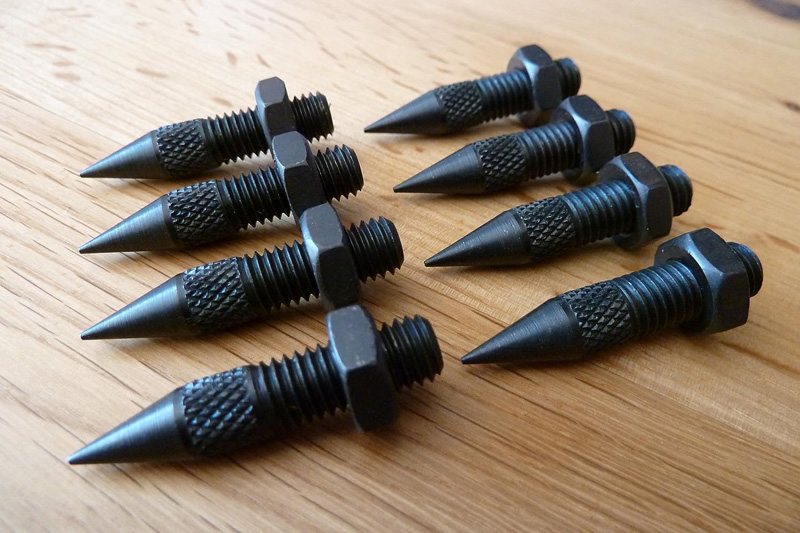
A tiny one-dollar part ($1.00) has driven every couple-decouple argument forever.
That part is called the “spike”. Not a two-hundred-dollar ($200.00) cone, not a thousand-dollar ($1,000.00) coupling device, not even a twenty-dollar ($20.00) brass Audio Point. Nope – the one-dollar four-decade-old spike sets the stage for all product testing and discussions.
In 2023 I am asking everyone, how stupid is that?
First used in the late 1960s as their sole purpose was to put airspace between a floor-borne speaker and the wood, tile, or carpeted flooring surface. The speaker required a universal part to raise it off the flooring surface and offer structural support. Rubber dots and springs did not work so well. Spikes became the chosen parts.
Spikes were the answer to most of the public objections, and they ever so slightly improved the performance of speaker systems. The cheap cost of the part drove it home as speaker manufacturers included a set of eight with each pair of speakers sold.
When spikes first came into the marketplace, vibration management was not a topic, product category, or concern in audio.
Today people believe that the spikes compete for your hard-earned dollars.
The truth is nailhead spikes suck. They are an age-old product born from the necessity to accomplish speaker stability.
Because of their longevity, written and advertised stories were created using the spike to form the accessory footer market in audio. A one-dollar part opened Pandora’s Box to a seemingly get-rich-quick scheme, dozens of theories, hundreds of isolation parts, and audiophiles believed all of it.
Spikes do not isolate!

Spikes never were used on the professional stage.
Speaker designers of today believe that the problems with their speaker sound can be corrected by adding or subtracting inductance or capacitance changes in the crossover, wire designs, and speaker damping materials.
Most speaker manufacturers rarely analyze the resonance build-up on every surface including drivers. This stubbornness, addressed in another chapter titled Electronics Cannot Fix Mechanical Problems, opens new doors to technical advancements and improving speaker sound.
Spikes are the one item that still drives meaningless audio chatter. The couple and decouple arguments abound where every vibration control product on the planet is always compared despite the cost. This stupidity in testing methodologies forms a roadblock in the evolution of audio knowledge and technology advancements.
Again, steel spikes suck!
Most competing companies never compare the price of the old one-dollar spike to their expensive innovations.
One example is when a company analyzes its isolation puck to a spike.
The footers retail for $1,180.00 per set of four devices and are made here in the USA. The spike retails for $4.00 for four pieces.
Excerpt from their website:
“Loudspeaker panel acceleration measured with an ACH-01 sensor, 10 dB gain, using 35 to 150 Hz log swept sine excitation. The measurements on carbide base footers are superior to spikes positioned directly on the concrete floor”.
The carbide base footer system beats the spike hands-down looking at the graphical poster-boarded information provided by the Home Team. The price of the puck also takes a giant leap upward. You get more for your $1,180.00 than the $1.00 spikes. How is that for testing sound quality?
A hidden victory lies behind our inability to analyze test methods and nonspoken cost structures between anti-vibration products.
Listed below is the reason provided by this manufacturer why the spikes lose in this test.
“The carbide base puck drains away the noise, effectively reducing rumble and other unwanted low-frequency artifacts, by turning as much as 65 percent of incoming vibration energy into heat.”
If we were to waste some time disproving or challenging the heat theory, you would see the following questions.
That estimate is 65% converts to heat, but what about the missing 35%? What happens to that missing 35% of resonance? What if that missing 35% continues to propagate and build up? How might that clog the signal pathways? Is it enough to reduce a component’s operational efficiency?
And that so-called 65% of the heat remains disproven. Does the heat convert to ballistic resonance and return to the greater mass or speaker cabinet?
Another fine example displayed by an online video is the one-dollar spike being tested next to a $2,900.00 spring-based speaker stand.
Once again, the poor little cheap-ass spike takes it on the nose. The test charts and results are even more stunning using hometown testing methodologies delivering home team victories. “Hurray for the Home Team”!
Are we that stupid to fall for this testing rubbish spoon-fed to us? Unfortunately, the answer to that question is – yes!
I am only supplying two examples of countless versions where manufacturers choose their best products and compare them to the lowest form of resonance management known on Earth – the spike.
If your company’s products cannot outperform a one-dollar spike, you have more issues than marketing and getting one over on the listener.
This type of testing begs me to ask, how many thousands of people fall for the hidden cost trickery involved with these open-ended testing methodologies?
Did you ever fall for this marketing innuendo?
I get angry at those who seek profit by pulling the wool over the listener’s ears and eyes. Keep the products similar in cost if you are targeting another product for comparison. Let the musical truth dictate the finer use of vibration management technologies.
Let the listener decide.
NOW THAT IS TESTING!
Part 7: PARTS THAT BUILT THE VIBRATION MANAGEMENT ACCESSORY INDUSTRY IN AUDIO

Designs such as pucks, springs, wafers, metal cones, spheres, and discs containing foams, metals, and wood blocks helped to shape and improve sonics. Over time, it has appeared that manufacturers of equipment could care less. The tidal wave of shapes and sizes, various geometrical designs, and logical and illogical parts began in the late 80s.
All these parts have one thing in common. Their design, no matter how abstract, is a coupling device.
The term decoupling was implemented into the Industry in the late 2000s to sell more merchandise. Only when the magazines and parts makers exploited the lingo, decoupling an audio device never existed on Earth. It defies science and the laws of Gravity and Motion.
Generic spikes began the whole thing and are the worst example of products that make equipment perform at a higher level. The cheap spike’s truest adversaries became decoupling or isolation arguments. The nail head spike quickly became the decoupling aficionados’ favorite product for discussions as they compare and test everything to a two-dollar ($2.00) spike’s performance.
We can pick apart the function, building materials, and hidden mystique surrounding every type of isolation/decoupling part made. Since Live-Vibe Audio’s primary part is a cone and couples, let us examine why companies claim springs, wafers, pucks, and wood blocks decouple or isolate resonance. After searching for a scientific means, my opinion backed by science and physics shows that they Don’t.
The goals for our company were to innovate a science. The science would require a single technical approach. Materials need to be limited in quantities with minimal weight constraints. The technology has to be scalable and measurable.
To make this theory a reality, we first needed to experiment with all known types and brands of products, methods, and materials.
We spent three years working with springs. They could not fit into our overall goals for product development. The shortcomings and difficulties in proving were:
- Spring fatigue results in the loss of dynamics and harmonic structures over time.
- There were too many inconsistent sonic outcomes involving weight capacities.
- The spring-based “isolation theory” is applied in a world where the coupling methodology is a science confirmed by the laws of motion and gravity.
- Applied Physics destroys audiophile beliefs and understanding. Audiophiles would rather believe in stories easily identified with fictional content.
Springs have a metal material contacting the component above and the grounding plane below. Some argue that springs transfer resonance energies, while others state springs isolate. Isolation methodologies keep the energy stored in the component. Some springs have a rubber coating for absorption and heat conversion, but the additional material does not make them a free-floating “isolation device” in gravity.
Constrained layer damping was not the answer either. There are separate formulas for every application under the sun. Materials and thicknesses used in multiple combinations define nothing more than an experiment as the outcome. In this case, the individual or proprietary formula is pure guesswork. Since everyone compares sound differently, these products will vary in performance as much as the materials used to construct them. There is no common or accepted reference standard.
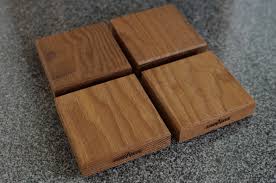
Wood does not isolate and relies on coupling for function. Wood blocks and wafers are prime examples of isolation verbiage used to brainwash or sell you on a belief. No proof exists in the performance whatsoever. When a woodblock vibrates, it establishes an audible frequency range humans can hear. The density of the species determines the flavor that will transmit into your listening space and produce a new harmonic added to your component’s chassis frequencies. Wood simply changes and adds frequency range to your listening and system performance.
I prefer to listen to the electronics and loudspeakers free from tonal wood’s sonic properties.
Absorption has long been used in audio to manage vibration. Rubber or Sorbathane, foams, sand, and quartz suit this application. Unfortunately, these materials that eat energy do not know when to stop.
The live dynamic musical properties associated with musical reproduction are highly fragile. You can lose the leading edge dynamics and harmonic layering due to a material selection and quantity used. Primary absorbent materials do not bode well when applying geometry to them for increased or limited function.
Mechanical grounding is the technology we chose to deliver a theorem and convert it into a science.
You can not ignore gravity while on planet Earth! The laws that we adapted to form science are all based on gravity.
Pucks of all types work much the same way. They still have energy flowing to the ground in a mechanical function.
Wafers generally include a harder upper and lower surface area, usually made from steel mesh with fiberglass in between, claiming the fiberglass converts the energy to heat. Only a portion of this energy converts to heat. There are always forms of energy that transfer to the earth’s ground. Again, physics works where storyboarding does not.
When applying a resonance transfer model to any formula, the results of the process can be tested and explained. Some slow the pace of resonance transfer, and some are faster. These properties are responsible for changing sonic aftereffects.
RESONANCE ENERGY TRANSFER:
Resonance Energy Transfer is the planet’s most logical, easier-to-prove theorem and functional methodology.
Isolation or decoupling processes will exist in audio only if you believe these methods defy the function of gravity.

A live, non-anechoic test facility titled The Energy Room™ is where the art of sound joins science and draws more attention to testing results minus the existing subjectivity. We no longer require a dead vacuum of space or a computer program to see where science is taking us. The Energy Room is a live listening environment. The design is capable of duplication to specification. Each room sounds and reacts much the same, making the Energy Room a non-subjective environment.
Our dedicated efforts ended with a methodology based on mechanical grounding using two primary materials. This process is duplicated, designed, and built to the exact structural specifications. A studio-grade testing environment and function now reproduce the same result for all Live-Vibe Audio products.
The mechanically grounded environment will remove doubt and bring the science of sound to higher levels of academia. This newfound place closes the door for all current testing methodologies to become unified, closing the door to subjectivity.
The single testing format where science agrees with audio is temperature reduction. LiveVibe products reduce heat. Thermal imaging provides the theorem results that can become a science based on existing mathematical understandings.
Reducing operational heat influences the sonic quality, parts longevity, and energy consumption. All we need now are the testing protocols and control, financing a third-party testing environment, engineers to collect and assimilate data, and the approval of our peers.
Part 8: AUDIO FORUMS, AS I SEE THEM

AUDIO forums remind me of Murphy’s Laws – never argue with a fool, for soon, people might not recognize the difference.
Are audio forums important? Everybody tells me they are. I try my hardest to learn from them.
Most people are reluctant to participate because of the forum’s condescending values and Murphy. However crazy, most discussions become argumentative. The readership is eager to follow the opinions of others and growing trends.
People believe the products they own are the best the Industry can provide. How often has this human trait caused audiophiles additional pain and money?
I question a lot of topics. Most of these are subjective and lack merit. The targets of the threads change as opinions force listeners to alter away from the original topic of discussion.
One of my favorites is spikes that anchor your speakers and do not allow driver movement to take place. I have trouble hearing those microns of chassis movement – can you?
Another is when they can feel their equipment vibrating. They require more isolation or deadening the chassis at that point – really?
Vibration has become more of a fear than understanding. You are in a musical environment where sound is present. The speakers will vibrate electronics, equipment racking, structural boundaries, and everything else, including the room. Electricity establishes vibration on all circuits, caps, transformers, and parts. You cannot stop vibrations from taking place. Musical playback and our ears vibrate, so vibrations are sound.
Another is “my equipment dealer” is the best! OK, we believe you.
I read a thread on a forum about how far one should toe in their speakers. Answers to this question were abundant and all over the place because it is the type of question that only you in your environment can answer. Every other environment and speaker placement becomes irrelevant to the opinions rendered. Then there is always the guy who brings out the book showing a formula for speaker placement, the listener’s position with a large gap between the back of your head and the rear wall.

Another never-ending argument features room acoustics and acoustic products. Bring in the acousticians. Acoustic products and sonic development is a theory based on various applications of many products. Acoustics is like a sampling of vibration management theorems where some work, some you cannot hear, some change sound for the worse, and some create more problems.
Have you ever purchased just one acoustic control device? Did your acoustician ever discuss furniture in the room, what materials make up the wall structure, how thick or how many drywall screws are attached to each room panel, or did they ever seek to cure the reflective ceiling corners where most problems occur?
The acoustic theorems require a fix. There are too many variables due to room design, furniture choices, placement, and equipment racking. We discuss room acoustic products further in this document.
Another favorite question appears in audio forums. Should I place the rack in the center of the speakers? Depending on the design of the equipment rack, this question is blind. Quite a few people opted for longer and more expensive cables to move their pre-stage gear off to the side of the room and lost a lot of money. This maneuver will cause different air pressure zones along the sidewalls and change the entire sound of the room.
Larger companies move their equipment to the side for loudspeaker demonstrations, so why not? They have the space in the room to do it. Seeing the speakers with only an amplifier on the floor provides less visual distraction, keeping your attention on the speaker system. Their job is to sell amplifiers or speakers!
Some listeners believe the source equipment positioned off-center on one side makes for a more profound and widening sound stage image. If this is the case, I question how that affects the pressure levels and sonics of the opposite room side.
A vibrating rack can add noise and frequency to the overall sonic of the environment. Furniture and album racks are full and empty of records, which also affect the side wall pressure zones and rear of the listening environment, so the stand shifting to one side of the room will affect the overall sound. Again, we return to the rack for a performance judgment or sound performance test. Funny how often that happens.
Either way, the rack should be less audible or the best case – inaudible.
My reaction to dealers, manufacturers, and their salespeople working the forum sites behind the scenes is the tell-all. Schilling of products exists on every type of audio forum. Like it or not, manufacturers and dealers will go to any extreme to generate sales.
I grew weary of typing, arguing, and teaching discoveries in attempts to show a newfound understanding, theorem, testing, and products proven over time that deliver evidence where resonance transfer is a viable ongoing technology.

After all, it only takes one goof or dealer with a long history with the forum to change the topic and focus on your shortcomings. When confronted, these people move on to another thread or hide forever, hence my unwillingness to participate in audio forums.
Going to YouTube might be the more informative approach when developing new sciences.
Some people use forums, while others do not. For me, forum participation is like taking poison. If you enjoy participating, have fun. Remember the personalities you are dealing with and their positions in life.
Experimenting or playing in a field of study for a short time now qualifies you as an expert. Expertise used to take ten years at your job to qualify as an expert. Therefore, we have a lot of people who consider themselves an expert in audio reproduction. Forums make experts out of every participant.
Dig a bit deeper into your searches. There are only a handful of masters. The masters are the only people with thirty years of experimentation, testing, and audio knowledge.
Rely on the Masters and leave the experts’ opinions alone.
Part 9: LISTENING IS A PERSONAL ART FORM

After spending most of my life conversing with listeners, I feel secure in stating that listening is a personal art form. The differences in what we hear, what we like to hear, and what we search for in hearing music and voice are like fingerprints where we are all different. Although we may think we hear the same thing, we do not.
How does one listen, or are you listening to a separate instrument? I was a live soundman and listened to the entirety of the presentation. If you asked me what the song title or words used in the song were, I do not know. The lyrics are meaningless except for the tones and harmonies of the vocals that mean everything to my ears.
I could tell you the instrument down to the brand name but do not ask me the song title.
In the case of musicians, they will always seek the instrument they play or are most suited for and listen from there. A bass guitarist will immediately focus on the low-end rhythm of the music. On the other hand, a vocalist assumes the lead and first listens to the message in the song.
The pianist is more of a well-rounded listener as they open up and focus on everything in the presentation, tending not to listen to one instrument.
There is the classically trained musician where everything depends on beats per measure, triplets, crescendo, and proper fade rates. A string player listens to the technique and articulation of the bow attacking or gliding across the strings.
A classically trained musician plays a minor step behind the note. A rock enthusiast plays slightly ahead of the same musical note. Which one is best? The listener has to decide that one.
Musicians have the same problems as audiophiles, where everyone listens to a different part of the music.

In the hi-fi experience, we have the person who listens to music for the rhythm and beat and the feeling of heaven on earth that music brings them to their lifestyle. We have the listener who uses music as a relaxing agent or physical therapy. The personality is searching for the pounding bass and kick drum that passes the time away with something in their heads other than day-to-day workloads – like an air guitarist.
There is the live concertgoer where everyone lets their hair down and acts like nothing in the world is a problem.
And then there is you.
But one must always be aware of the dreaded Audiophile. This listener realistically seeks out their passion, is less afraid of voicing an opinion, and tends to forget there are so many others like him. They rarely agree with one another because of their measure and tastes.
There is the analytical audiophile that seeks details to the nth degree. The height and width of an imaginary soundstage with instrument placement are two dreamlike characteristics they want to hear.
The old nitpicker and walking measurement device places analytics ahead of the musical score.
We have the audiophile who enjoys deep-sounding recordings, feeling the beat, relaxing to the jazz, getting away from it all, and plain old enjoying musical reproduction. Let us examine the audiophile who also listened to poor recordings, bland records from the forties, and early-on musical systems searching for the golden jewel in sound.

And then there is you.
The product reviewers hold another set of keys to understanding audio listeners. Like everyone else, they have opinions associated with sound quality. Many equipment reviewers are journalists first, listeners second, and the desire to know and understand how sound and music reproduction work finishes dead last. Reviewers associated with advertising publications should show their listening suites to the public. The listening environment tells a lot about the people listening to music and their understanding of sound.
Years ago, long before I was involved in the high-end audio business, one of my favorite reviewers that I followed sent me images of some equipment in his listening environment. A dining room table with a turntable on top, amps sat on oak dining room chairs, and the speakers placed on carpeted flooring with Venetian blinds in the deep coves of the room and one bass trap sitting between the windows. With a setup like this, I gave up following his reviews.
Many things affect our listening and perception of sound. A hidden problem was a well-respected reviewer’s seating chairs (lounges) were too tall. Absorbent materials on the headrest are eating dynamics and harmonic layers before entering his ear canals. Moving forward in the seat six inches opens up a new world of sonics. Are all those reviews he produced over the years now incorrect or misleading? All because of a chair headrest?
Should we care?
There is no correct or incorrect way to listen to music. Feel your passion and listen for the musical score that makes you feel the best.
You are the only listener that matters.
Remember the first time you listened to a fine audio rig and how that hooked you?
Part 10: MASS LOADING TECHNIQUES
Mass-loading is a form of coupling I am not so fond of as it changes the sonic of the device and what the designer has procured or wanted you to hear.

Some elements or techniques include adding additional weights of various materials and shapes placed on equipment, parts, and chassis that will change the sound of the Hi-Fi equipment.
If you mass load anything, allow two weeks for resonance settling and absorption to settle. We recommend a month to hear all the differences mass loading is capable of sounding. Then remove the add-ons and experience your previous reference point.
If the reference sonic is better than adding the mass, you have added another issue to the system’s performance. After this listening test, rarely do people revert to mass loading principles.
I am implying that the point of your original reference is most important when sampling some of the industry’s vibration control parts, mass, or audio components to the system.
The original point of reference matters greatly.
Mass loading also changes the sonic of your product and drives the original designers crazy. They wanted you to listen to their design without change. You should also remember that you purchased that product for a reason. The sound of this component drew you in, so why change its sonic character?
If you want to take it further, put a spring between the mass loading part and the chassis. According to Industry beliefs, the equipment is – decoupled.

The mass loading part generally has a rapid absorption rate when you couple the gear to a spring. The spring is now directly attached to the chassis, significantly slowing the resonance transfer process. What are the chances this concoction will make you satisfied?
Take the knock-knock test. Knock on the chassis or speaker with your knuckles, and you will hear a frequency. Mass load the device and knock again. Notice how the mass-loaded frequency lacks pop and vitality. The device reduces the live dynamics.
What sound are you looking for in musical reproduction?
Live Dynamics or Dead Harmonics?
I built a product when mass loading was the popular trend. It could balance with a good portion of the device hanging outside the chassis into space or over a set of speakers or RCA input or output binding posts. Every time I moved it into a different area, the sonic changed. After a month of testing, I wanted to title the product “NUTS” because that is where it left you as a listener.
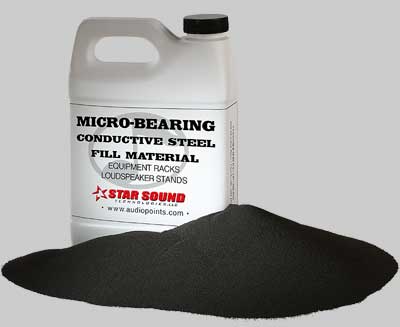
We decided not to bring this device to market. We will never be one of those manufacturers that simply change the sound to sell you a boatload of products. They are the industry’s parts makers that keep you guessing and purchasing. Our company is vibration management specialists. The products use a single technology. The products do not change musical character!
Mass-loading will change the sonic measure of any product. Sometimes, modifying the sound is all the listener is interested in achieving. It will leave a euphoric sense of self-accomplishment and human discovery. It will feed your ego as if you created the system’s sound. This effect is short-lived because when listening to a cello in its natural state, the instrument never will sound like the mass-loaded version. There will be two entirely different versions of the same cello.
If you like adding mass to a component or speaker system, keep it.
Mass loading is just not my cup of tea.
Part 11: WHO AUDITIONS EQUIPMENT RACKS?
Who auditions equipment racks?

Who believes an equipment rack is the most influential product in the audio chain?
Who has ever heard the difference between two high-end equipment racks?
Not those who continue to toss away thousands of dollars at components and speakers and hope to reach the point of investing in more music content instead of equipment.
The equipment rack is the most significant purchase anyone can make.
The racking determines the sound capacity of everything you purchase. Electronics, power distribution, and speakers, up to and including cables, have sonic benefits you may never hear because of a less efficient system.
The difference between vibration management theorems and results is incredibly audible and not subtle because the technical approach, material science, and applications are generally different.

Why are you changing out electronics, speakers, cables, etc., and searching for the grail?
The rack dominates and dictates the performance and operational efficiency of everything placed onto it using physics. The same is true for loudspeaker stands, plinths, and footer systems.
OK, so you may not believe us. Equipment racks are never a hot topic for reviewers. The failure to understand how they work and why they are so different is all too apparent. We hear that from reviewers all too often. After thirty years of doing what we do, it is safe to state that most reviewers are lazy. Do not fall victim to the power of the pen!
Hi-fidelity begins performance at the foundation.
Remember, laziness and lack of hearing for one’s self have bankrupted many an audiophile!
We admit that some racks have over fifty parts and are difficult to build. If the designers of equipment racking did their homework, even the heaviest rack available should assemble in thirty minutes or less.

We can prove why the laws of gravity, motion, and Coulomb’s friction affect musical reproduction in the comfort of listening to favorites on your system. That part is easy.
All you have to do is plan some time and make the effort. Call it a labor of love as you will discover how much musical content and sonic wonderfulness are currently missing. The best part is that these musical qualities already exist in your equipment, and your rack may not work in your best interests.
We can also prove all this by using your speaker system if that is an easier way to realize just how good your speakers are. Are you willing to place a platform under your speaker system?
If you have amplifiers on floor stands, these provide proof of audition. This process will open your mindset to the power of Live-Vibe Technology™ – the Science of Resonance Transfer and what performance-driven equipment foundations deliver to musical reproduction.
Part 12: WHO AM I? WHO ARE YOU READING ABOUT?

I am just a simple man with a fun past, learned a lot along the way, and would like to share some experiences.
My father was considered an audiophile before the term ‘audiophile’ was associated with music buffs. He worked with the original Bell Telephone engineers and was responsible for the world’s first transistor assembly line at Western Electric, Allentown, PA.
This group of music enthusiasts modified their Scotts and Fishers while building their speaker systems. I had the whole house sound system when most listened to two or four speakers. We had stereophonic speakers in all living spaces, outdoors in the garage, and on the party patio, including all the bathrooms! The switching network was mind-blowing in comparison to today’s standards. It maintained 3.7 ohms to 8.5 ohms no matter how many pairs of speakers played in the house.
Every guy had a hundred records in their collections, taught me how to solder, and enjoyed music. Within the rest of my family were the players. Accordovox, piano, organ, percussion, and guitars, so needless to state, my future is headed in the musical direction.
After playing in “combos” (an early description of bands), I noticed players exceeding my talents. I began unloading trucks at the earliest concert venues consisting of block buildings with ice-cold concrete floors – no seats or seating and extremely hard on the tush. This volunteerism allowed me to see the setup and show for free while I learned.
The sound truck would arrive two hours before the lighting guys to secure the AC power closest to the stage. The lighting guys would have to run their extension cords from the kitchen. It was a dog-eat-dog world where clean AC power was the hardest to attain. I learned that wattage and amperage ruled the night.

I also worked for a store called Listening Booth, selling hi-fi equipment that opened up my understanding of dealing with the public. The audio crowd always seemed nicer when meeting them in a record store. I won sales awards and trips to the Consumer Electronics Shows held in Chicago.
Eventually, I got caught backstage at a concert venue. Wanting to know who I was outside of a labor-free technician, the soundman from Wishbone Ash gave me a chance to show how much I understood sound equipment, where my pitch attributes were sharpest, and how much I knew about musical instruments.
The next night, I was mixing monitors in a theater environment and killed off the first five rows of patrons due to a 12kHz feedback. I could not locate the problematic channel to save my life or those front five rows. I still remember the looks on their faces as it was excruciating, just bloody painful. I remember seeing one person crawling on the floor, searching for a way out!
I worked with many musicians over the years, headed a sound reinforcement crew, and managed sound for a well-established theater as my job and employment titles changed often.
From stage manager to sound engineer, eventually excelling up to Sound Consultant, I earned a living picking apart million-dollar sound rigs and providing concepts to improve them.
My favorite touring memories were:
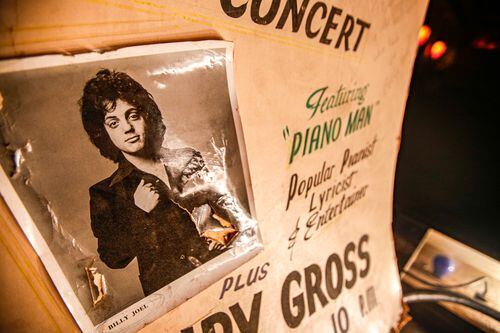
Billy Joel as the piano man (just him and a grand piano in a five-hundred and thirty-eight seat theater), Grace Slick (One Pill Makes You Larger and I Fell in Love for the First Time), ACDC’s first show in the USA (hey, these guys are going places), YES (how to mix harmonies done right), Heart’s Dreamboat Anne tour (Fell in Love for the Second Time)
38-Special (why sound people like me should stay away from pyrotechnics), Rush (who taught me how to tune a drum kit), The Tubes (showed me how to drink a bar dry), Hawkwind (Stacia, my eyes will never be the same), ZZ Top (demonstrated what Texas heartburn could do to me at a young age), Iron Butterfly (there is much more to music than the damn drum solo),
Vince McMahon WWF (two Sennheiser 421 mics under the ring… you’re going places kid), Steve Martin (easiest of shows that paid large – only three mic channels), The Who (sizeable sound systems are much louder than smaller versions), Aerosmith (talk about a party and I once thought I had a problem…), Frank Zappa (never got to meet Dynamo Hum), Pointer Sisters (how to drive a limo vs a truck), CDB (they called me Hippie),
Allentown Fire Department (why lighting crews only have three wires to remember), KISS (GS, who the f*** booked us in a small theater? Last I heard the promoter was still running), Tina Turner (hands-on education as to handling flaming idiots), Level 42 (best Brit jazz band in England, but unfortunately they kept that secret to their sound check only), Roy Buchannon (who showed me how a Fender twin reverb amp should sound),
Ratt (lots of young cheese), Budgie (how to deal with a deaf drummer’s stage monitors = Community Leviathan Bass Horn cabinets!), Rowdy Roddy Piper’s Pit (the microphones came back in pieces and still never got paid for any of them-eh?), Joe Cocker (better to show up late than never), Steve Miller (the all-in-one tour manager, sound engineer, and producer who loved Audio Points), Aynsley Dunbar played with Journey (how to give an audience the one-finger peace sign and mean it), Manfred Mann (a ship’s bell is part of the drum kit), Johnny Winter (why the road crew does the entire soundcheck),
Jon Bon Jovi (taught me to always maintain the highest quality of sound in the music) and the group that educated me the most about sound and equipment – Pink Floyd (aka Dark Side of the Moon and Animals tour).
And all the stories you have heard from touring road crews about those years in music are true!
In my days of mixing professional sound, when on break, we would stop by our counterparts at the local hi-fi shop for a listening session or purchase some equipment. In those times, tube equipment ruled the planet. My favorite receiver was the Sansui-SAX1000 driving AR-25XL monitors with a Girard turntable and a Pickering or Shure cartridge. A simple sound system, reasonably priced, provided me with the fix needed when breaking from the live music scene.
I retired from sound reinforcement and the recording sciences due to a back injury during the final night of Jesus Christ Superstar. I was hurrying to the aftershow party and picked up a small forty-pound stage monitor, injuring my spine. Jesus H. became my new cry out when things go badly.
Now, what happens to a guy like me?
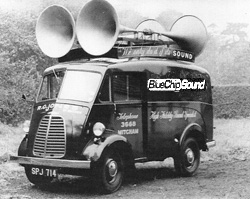
I opened up a stereo hi-fi shop and became a dreaded audio dealer. My experiences in running a business and designing a shop were many. Everything from building championship IASCA Car sound systems, innovating subwoofer enclosures, having visits from Chris Browder and John McIntosh (B&W Europe and the USA), Dick Boak from Martin Guitar playing the Eric Clapton Unplugged Martin serial # 02, and supporting many of the leading hi-fi manufacturers and rock and roll bands visiting our city.
Audio manufacturers and their sales representatives referred to us as the most popular and profitable shoebox on the East Coast since we only had 1,000 square feet of retail space.
We won sales awards from a host of companies. My favorite was from Monster Cable. They invited my crew to center-stage table seats at their annual CES Diner Concert series. We were invited backstage to meet a long-time idol, B.B. King, and also spent time with Tower of Power. I received my annual itch to return to live sound but realized those days were over.
Speaking of cable companies, I witnessed a lot of cheating in those early years, such as inserting Belden standard microphone cable into gorgeous wire-meshed jackets with fancy powder-coated Neutrik connectors selling for $600.00 per meter. The cost was around $22.00 to build one pair. I had trouble with cable design and pricing ever since that time. This Industry precedent of crazy profit margins launched around the same time car dealers rolled back odometers on used cars. No wonder these manufacturers got so big!
Within our store, I built a structural environment that allowed me to pinpoint a center image on the tip of your nose to move it back deeper into the space by creating pressure and tension on various wall surfaces. The room is how I met our Founding Fathers, a group of Lehigh Engineers who all graduated in the top five percent of their class.
We soon began experimenting with everything from spheres to springs to cones, racking systems, footers, shelving, and walls. Manufacturing was the next obvious move. After working ten years as an audio dealer, we opened Star Sound in 1999.
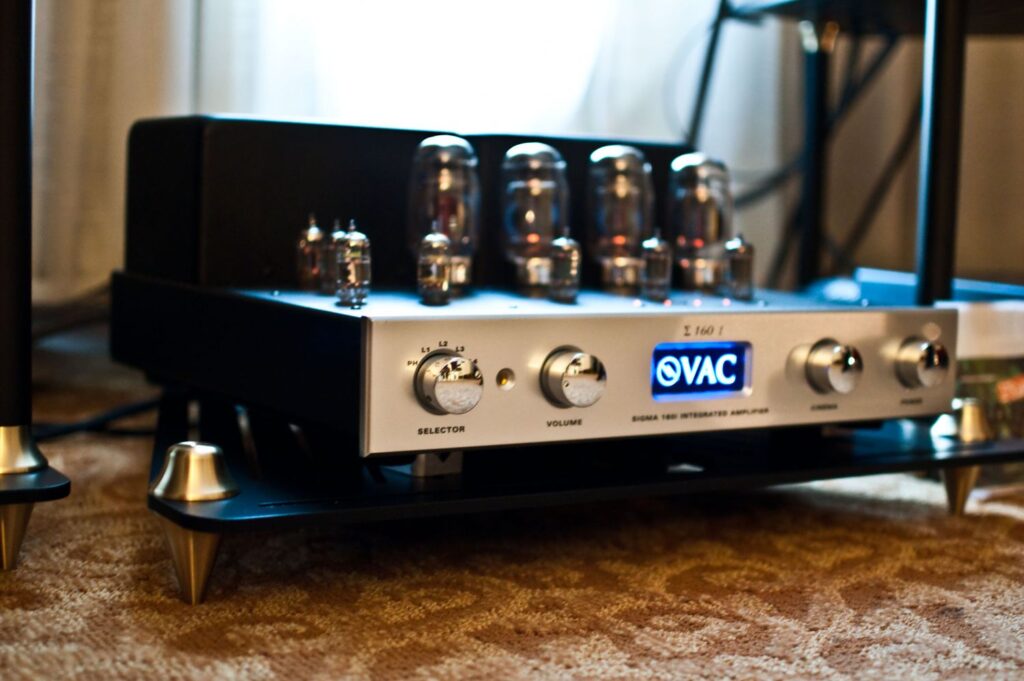
My favorite experiences as a manufacturer were the twenty-six years of tackling problems, solving them, and working to improve people’s sound systems. I have learned a lot from my mentors and the listeners.
We loved Trade Shows. The opportunity to meet our peers, clients, and critics makes the Shows worthwhile. However, spending this life in retail and manufacturing sound equipment has many pitfalls and learning curves.
My worst memories were being financially conned out of money twice, experiencing our economy through three wars, the great recession, a couple of fuel shortages, a flood that wiped us out, various episodes of inflation, and the latest COVID-19.
But, like everyone reading this, we music lovers still have our place to retreat, listen to tunes, and move away from the daily struggles of living.
Life is Good!